
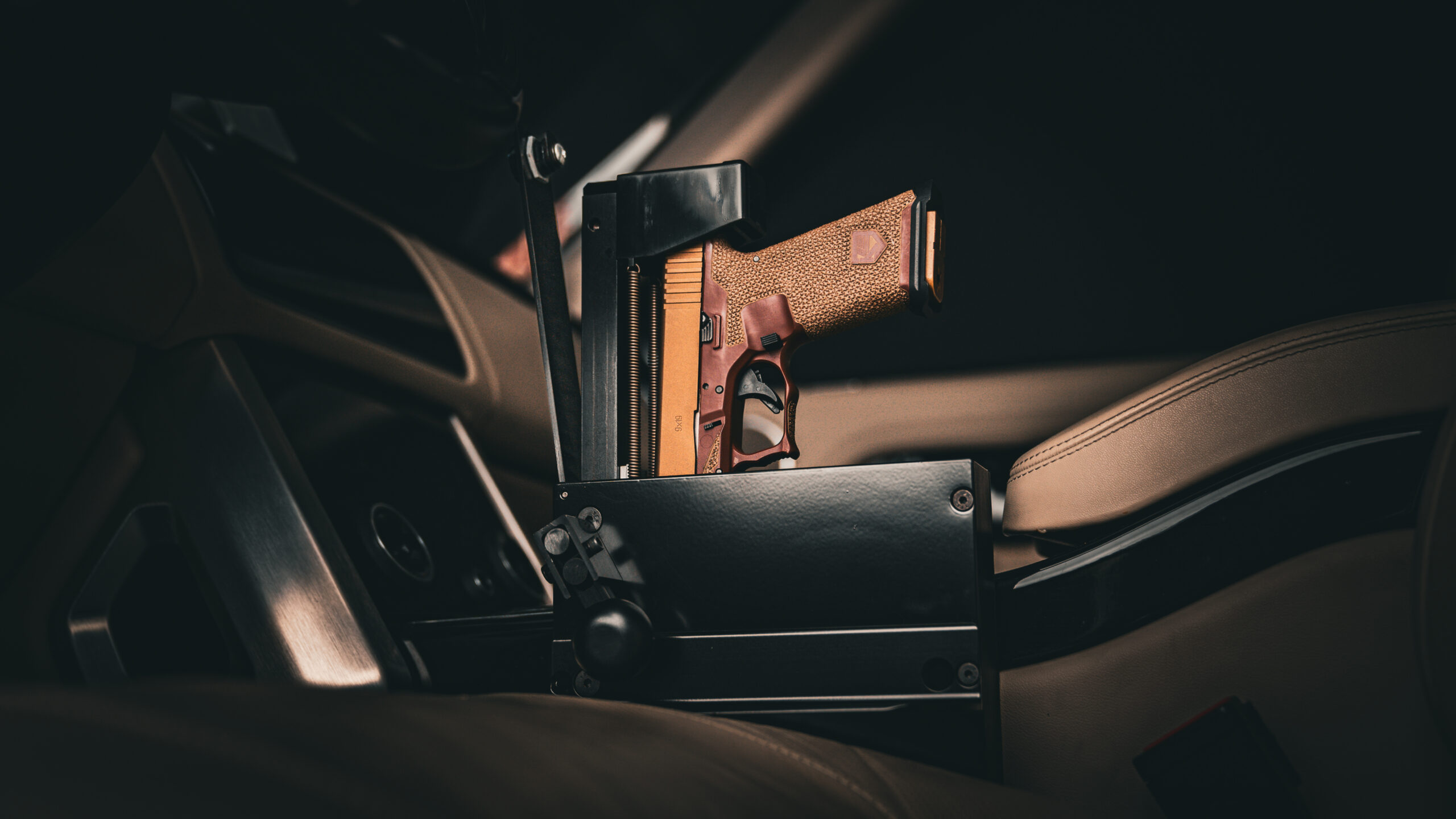
If you store a firearm in your vehicle, reliability matters. When you need access, your safe must open. When you leave your vehicle, your firearm must stay secure at all times. Many vehicle gun safes use electronic locks. These include keypads, fingerprint readers, and wireless entry systems. While they may seem advanced, heat inside a parked vehicle can cause serious problems to these electrical systems. At Kwick Strike, we focus on responsible, dependable firearm storage. This guide explains why electronic car safes fail in extreme heat and how you can avoid those risks.
How Hot Does Your Car Actually Get?
Your vehicle can become much hotter than the outside air. On a warm day, the inside of a parked car can reach dangerous levels quickly. Vehicle cabin temperature can rise above 140°F in direct sunlight. In some regions, temperatures can go even higher.
Heat builds up because sunlight enters through the windows and becomes trapped. Dark interiors absorb more heat. Metal parts, dashboards, and seats all retain heat long after the sun sets. For CCW holders who store a firearm daily in a vehicle, this means your safe is exposed to extreme heat for long hours at a time. That heat directly affects the electronic parts you rely on to access your gun.
The Electronics Inside Your Vehicle Gun Safe — And Why They Fail
Electronic vehicle safes rely on multiple small components. These parts can be highly sensitive to temperature changes. Common electronic systems can include keypads, biometric fingerprint scanners, backup batteries, wireless key fobs, and even RFID access cards. Each one of these can degrade in high heat. If your car gun safe is not opening, heat damage may be the cause. Electronic failure analysis often shows that repeated exposure to high temperatures shortens the lifespan of components on the very device your life may depend on.
Lithium-Ion Batteries: The First Component to Fail
Most electronic safes rely on a Lithium-ion battery. These batteries perform well in moderate temperatures. However, extreme heat can cause faster battery drain and reduced lifetime, and in extreme temperatures can cause a failure over time. Heat speeds up chemical reactions inside the battery. Over time, the battery cannot hold a charge. You may press the keypad and nothing happens.
When confronted with an electronic lock not working, in vehicle storage cases, battery degradation is often the answer. Electronic safe locks typically last several years in climate-controlled indoor settings. Inside a hot vehicle, that lifespan can drop sharply. A failed battery can mean being locked out when you need access or being unable to secure your firearm properly.
Biometric Scanners and Keypads
Many modern safes use a Biometric fingerprint scanner. These systems rely on delicate sensors and circuit boards. Heat can cause delayed recognition, screen warping, and possibly internal board damage when exposed to high temperatures over time. Fingerprint scanners may stop recognizing your print after repeated heat cycles. Sweat, dust, and vibration inside a vehicle make the problem worse.
Keypads also degrade. Rubber buttons can warp. Internal contacts may fail. LCD displays can darken or stop working. When EDC depends on rapid access, even a short delay creates risk. Electronic systems may not fail all at once. They often show warning signs first, such as slower response time or random errors.
RFID Tags and Wireless Systems
Some safes use RFID / NFC access systems. These systems rely on wireless signals between a tag and the lock. While convenient, they depend on internal circuit boards and a stable signal for communication. Extreme heat weakens electronic connections and plastic components can expand. If your car gun safe is not opening with its key fob or access card, heat-related electronic failure is a likely cause.
What the Manufacturers Don’t Tell You About Vehicle Use
Many electronic safes are designed for indoor use. They are tested in homes or offices, not inside parked vehicles in full sun. Manufacturers often list operating temperature ranges. However, real-world vehicle temperatures can exceed those limits. Another concern is gun theft. Research shows vehicle break-ins are a major source of stolen firearms. A safe that fails electronically may remain locked when you need it, but if its housing is weak, it may still be vulnerable to forced entry. If you rely on electronics in extreme heat, you accept those risks.
Mechanical vs. Electronic Gun Safes: A Side-by-Side Comparison
Understanding mechanical vs electronic gun safe systems helps you make an informed choice. Electronic safes offer quick keypad entry and can be set up to allow for multiple user access codes. But they are vulnerable to heat sensitivity and reduced battery life in extreme temperatures.
Mechanical systems, including all-mechanical firearm storage, operate without batteries or circuit boards. There is no battery to fail, no parts to overheat, and provide you with consistent performance. When it counts most, reliability often matters more than convenience. For a parent storing a firearm in a vehicle, dependable locking matters every day.
How Kwick Strike Eliminates the Heat Problem Entirely
Kwick Strike designs rapid-access, high-security vehicle gun storage built for real-world conditions. Instead of relying on batteries, fingerprint readers, or wireless tags, Kwick Strike uses a fully mechanical locking system. This eliminates battery drain, heat-related degradation, and circuitry failure. Because there are no electronic components, extreme heat does not affect lock performance. Mechanical systems also reduce long-term maintenance costs as there are no batteries to replace and no electronics to troubleshoot.
Your vehicle gun storage should meet two main goals: prevent unauthorized access and provide reliable access when you need it. Kwick Strike vehicle safes are engineered to do both. For more guidance on responsible firearm storage, visit the Kwick Strike blog page. If you have questions about installation or compliance, contact the support team through the Contact page.
Responsible firearm ownership includes secure storage that works in real-world conditions. By understanding how heat affects electronics and choosing durable mechanical systems, you protect your firearm, your family, and your peace of mind.