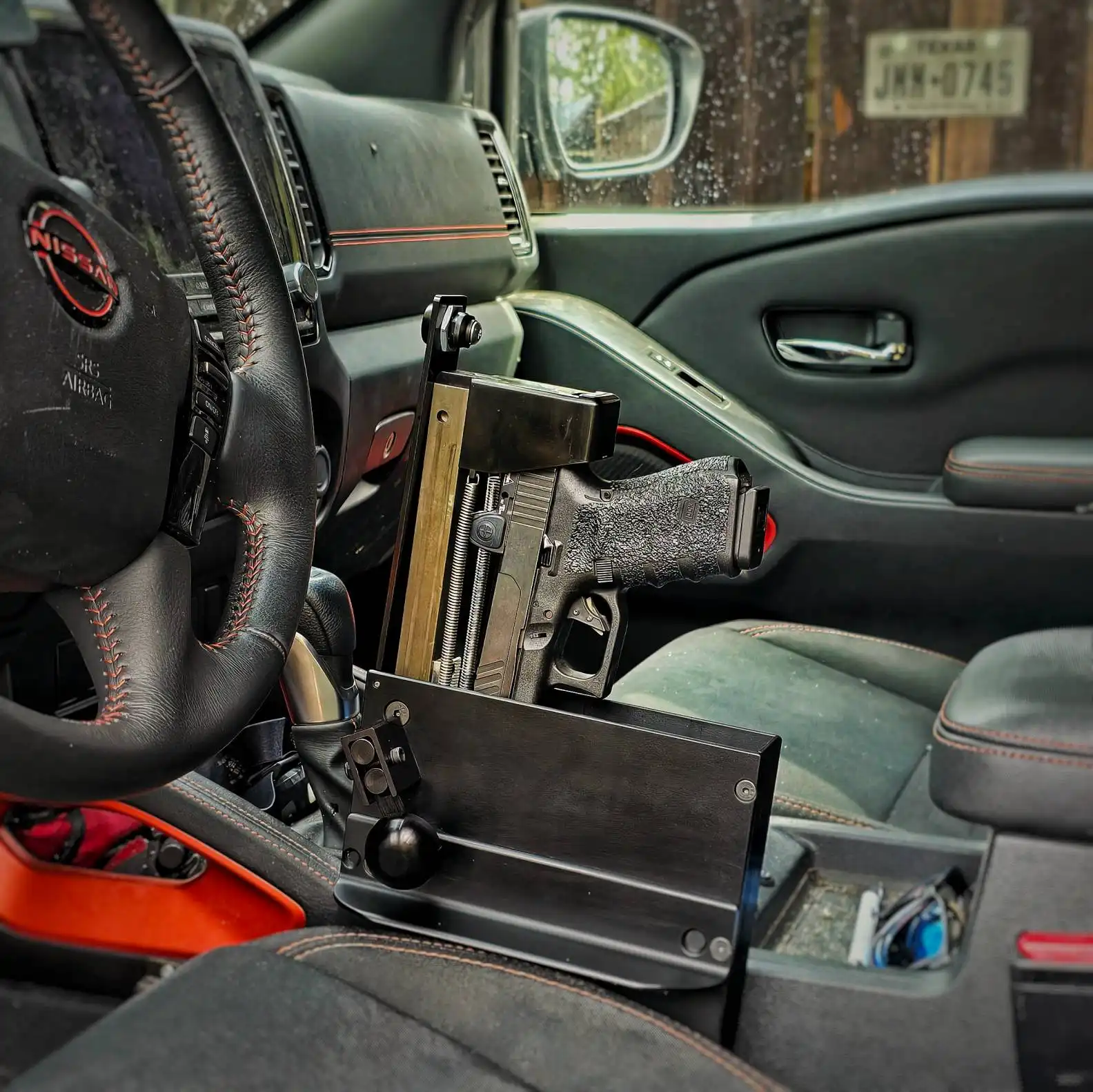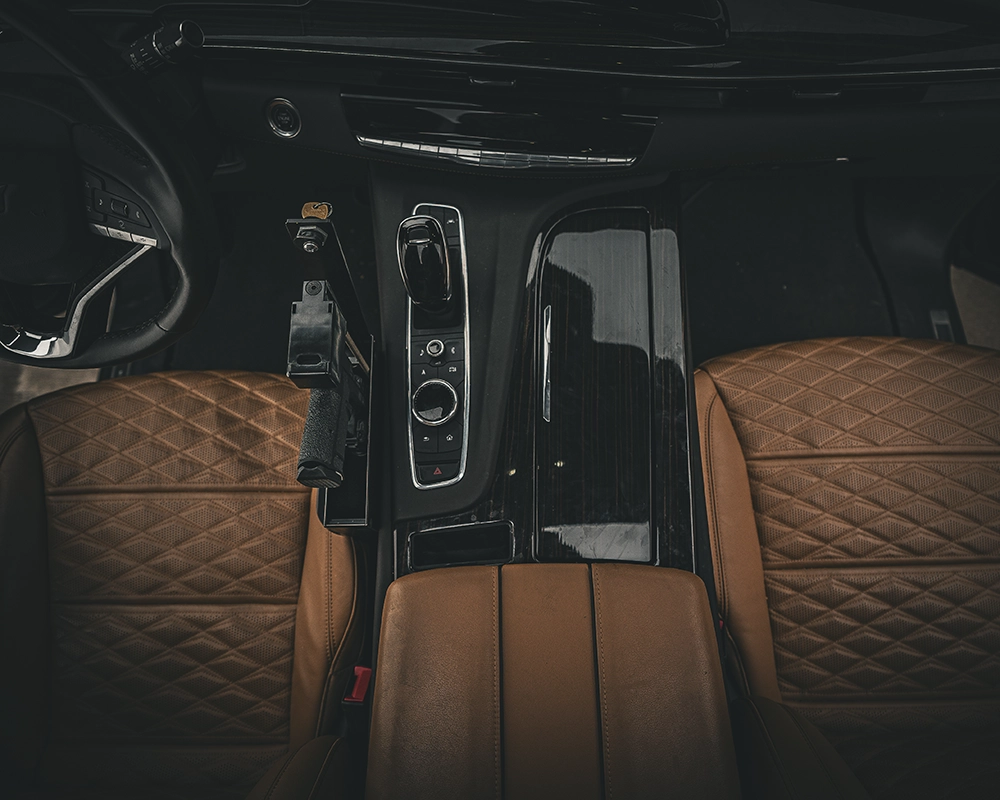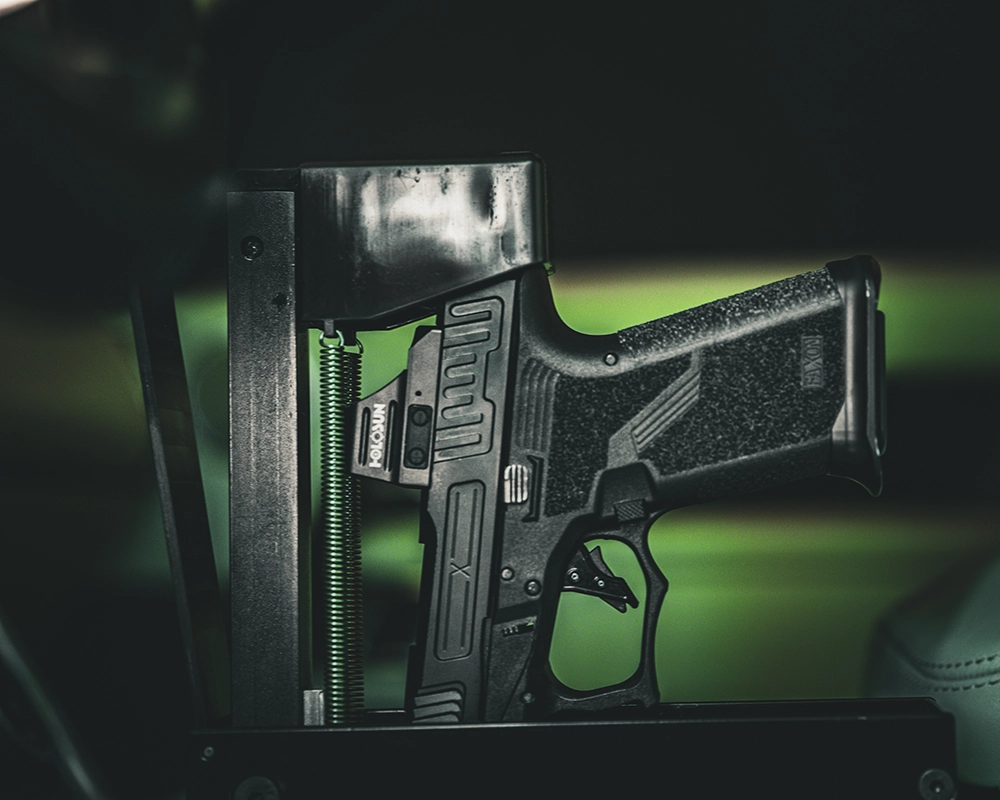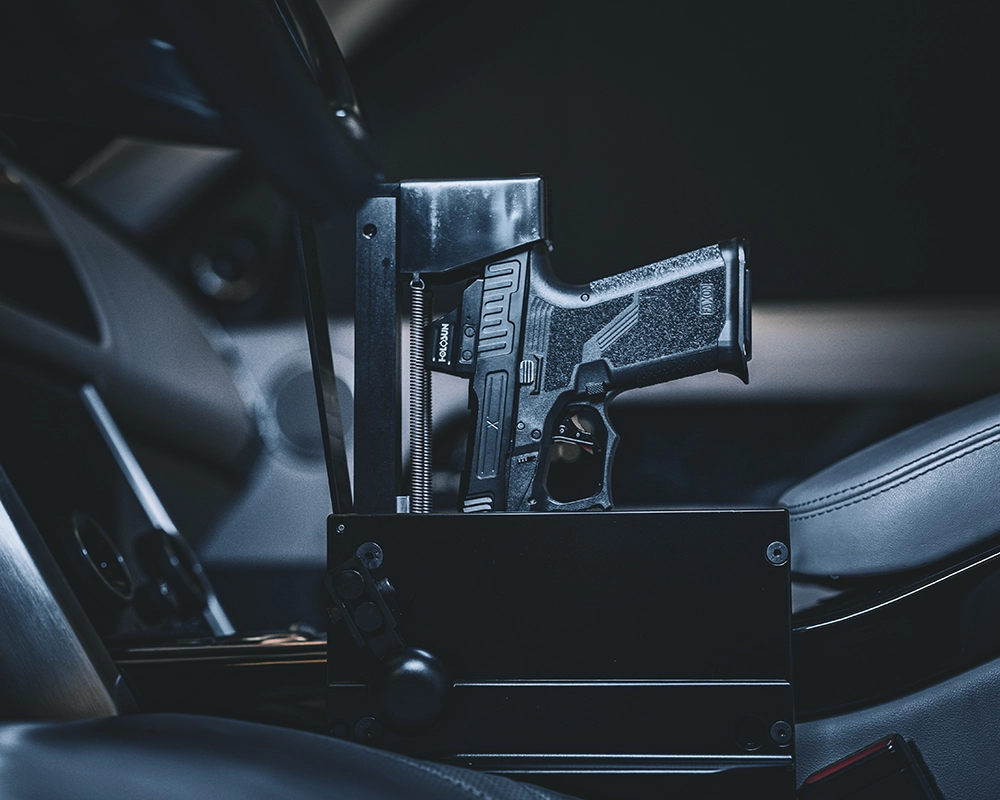
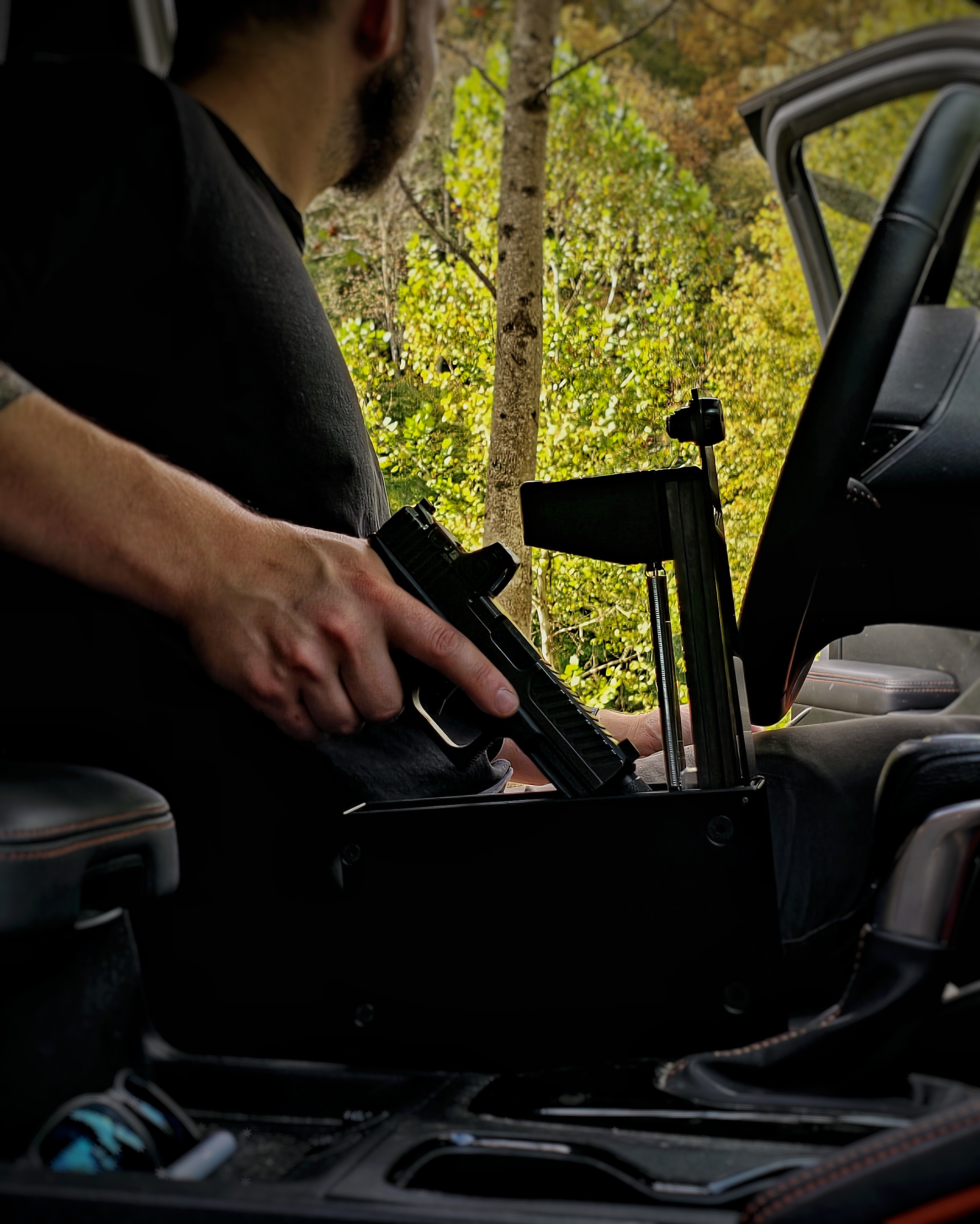
Gun owners should know the key differences between gun lockboxes and gun cases. Learn which firearm storage solution is right for your security, portability, and quick access needs. As a gun owner, you need reliable ways to store your firearms safely. Gun lockboxes and gun cases both help with that, but they serve different purposes. A lockbox focuses on secure, often quick-access storage at home or in your vehicle, while a gun case prioritizes protection during transport. Understanding these options ensures you pick the right one for your situation, whether you’re a responsible CCW holder needing fast retrieval or a gun owner with kids who needs to prioritize child safety. This guide breaks down what each is, their key features, differences, and when to use one over the other. It also highlights how solutions like Kwick Strike fit into vehicle storage for everyday carry.
Understanding Gun Lockboxes: Security and Quick Access
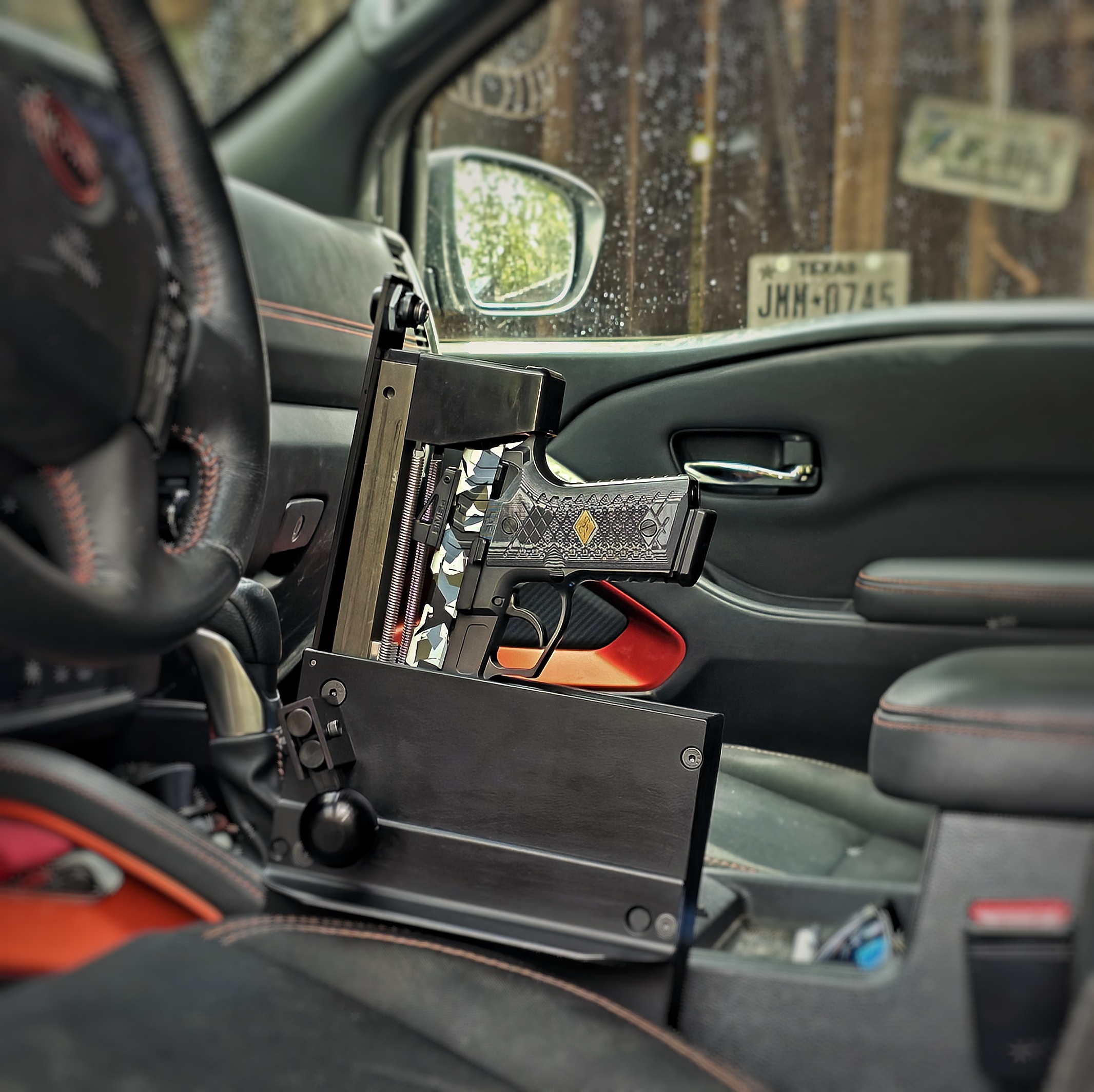
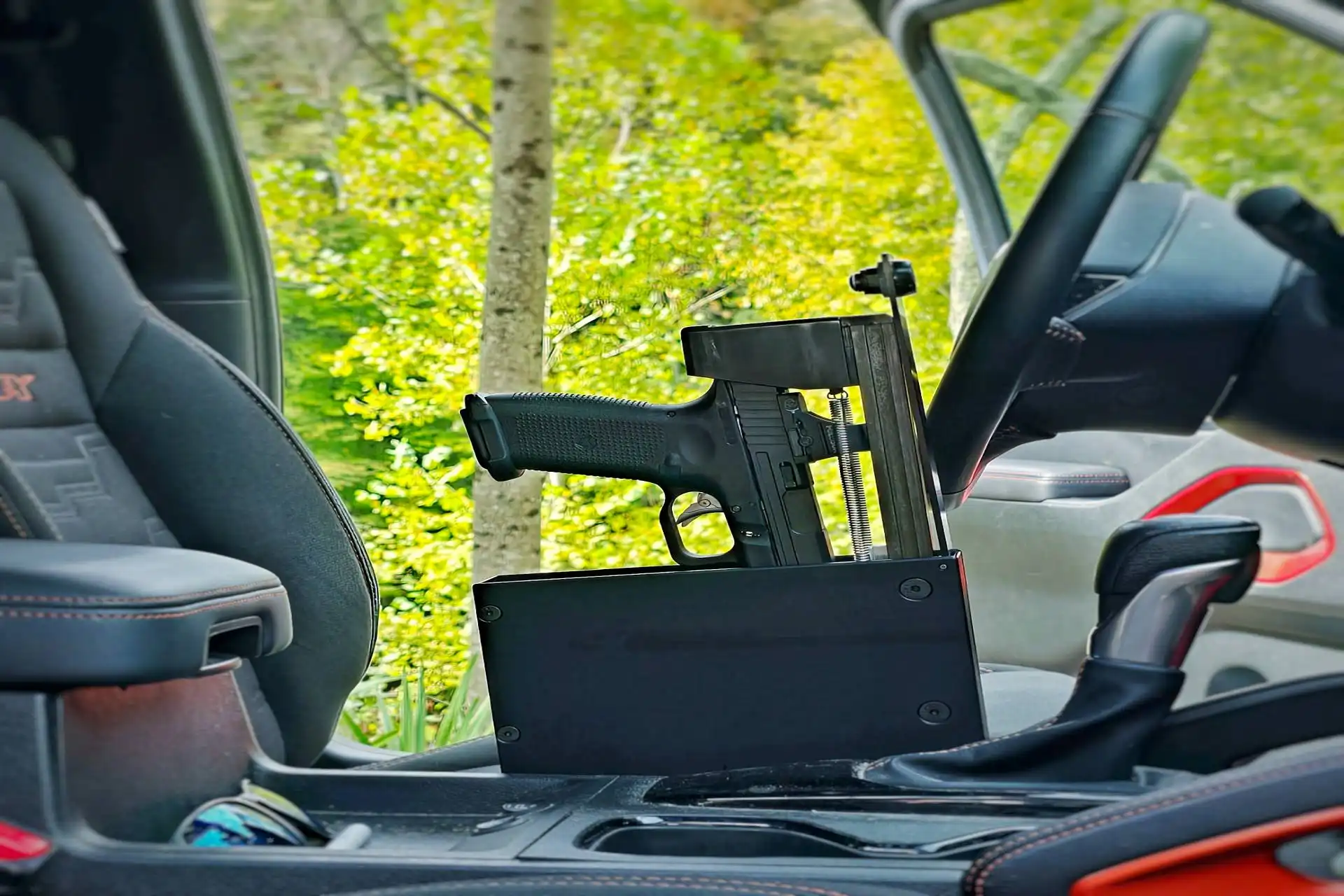
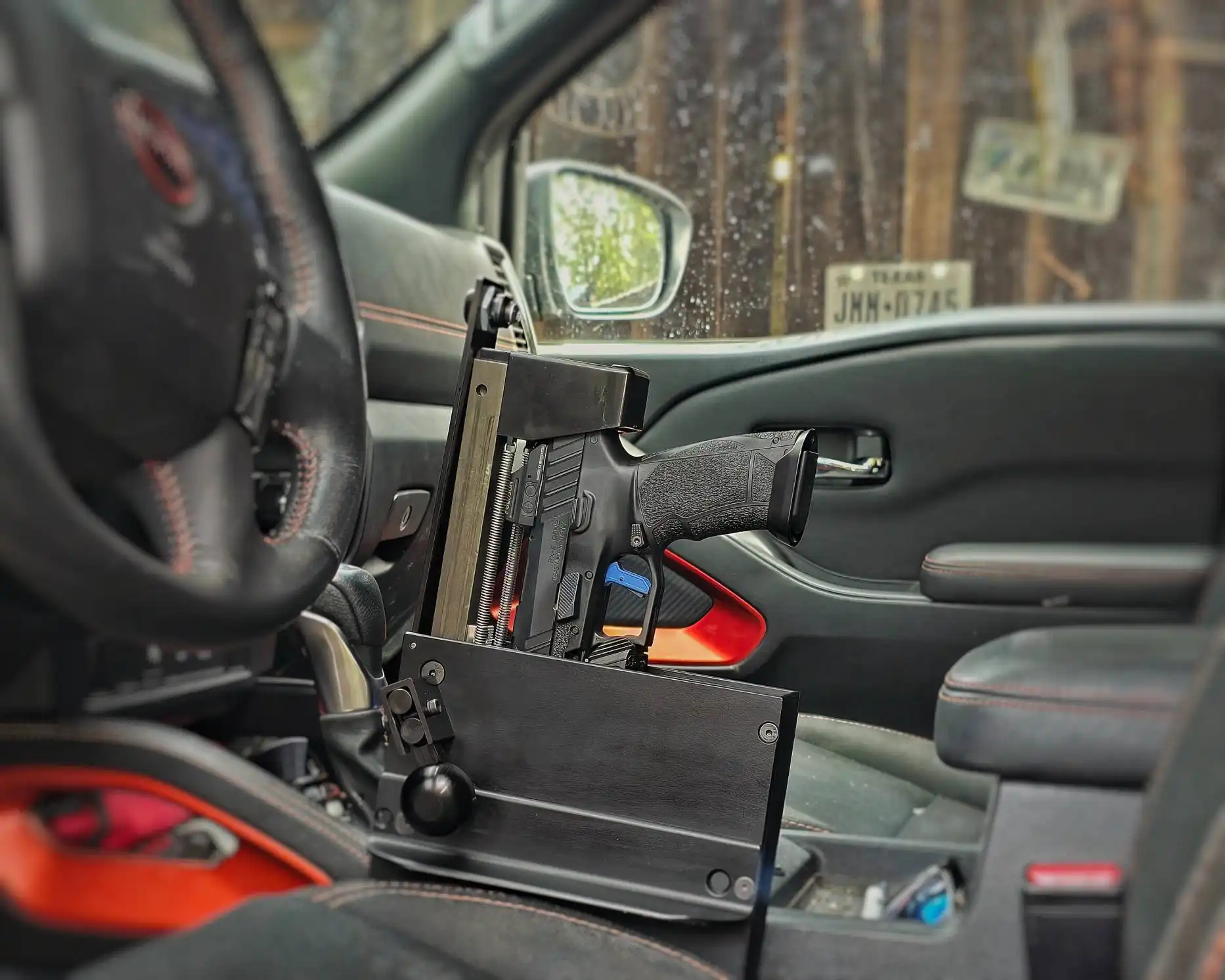
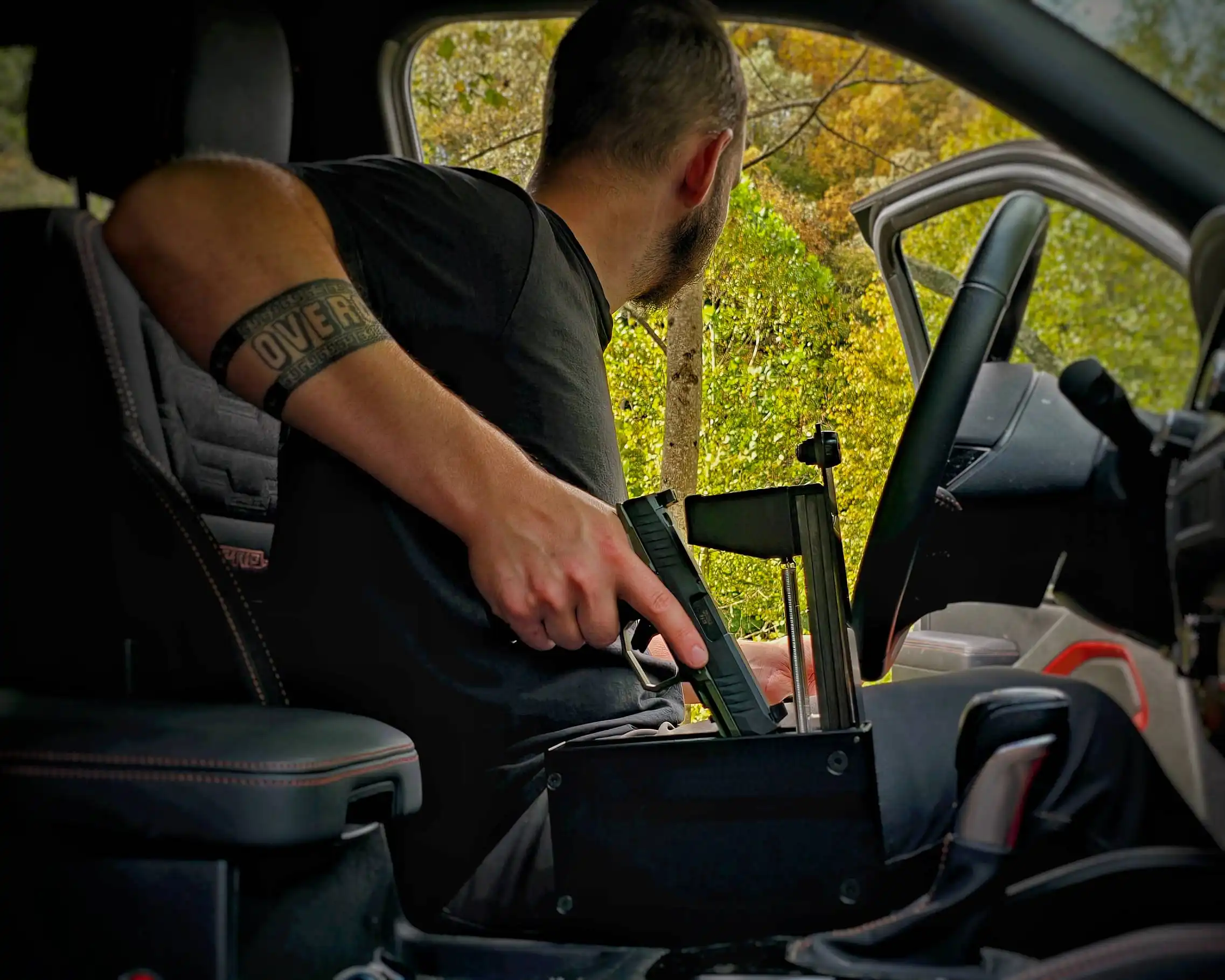
A gun lockbox is a compact, locked container designed for handguns or small firearms. Made from metal or reinforced materials, it uses keys, combinations, or biometrics to unlock. These boxes provide secure storage in homes, vehicles, or offices, keeping guns away from unauthorized users while allowing access when needed. For everyday carry, or EDC, lockboxes offer quick access as some models release your firearm in seconds. In vehicles, they mount under seats or in consoles, blending in for discretion. Advantages to these are high security against theft and accidents, plus portability for moving between locations. The biggest disadvantages involve their limited space, as most can only hold one or two handguns, plus the potential for biometric failures in dirty or cold conditions. Mechanical options avoid this, providing consistent performance for the easiest access. Gun vaults are similar but larger, often for multiple firearms with heavier construction. Lockboxes are best for those needing firearm storage solutions that balance security and convenience without taking up much room.
What is a Gun Case? Types and Primary Uses
A gun case protects firearms during transport, shielding them from damage, weather, or prying eyes. Cases come in soft or hard varieties, with most being lockable for added security. They comply with laws for travel, like TSA requirements for flying, where firearms must be unloaded, locked, and in checked baggage. Hunters traveling with firearms use cases to carry rifles or shotguns safely in vehicles or on planes.
Soft Gun Cases
Soft cases use fabric like nylon or canvas, with padding to cushion the guns. Lightweight and foldable, they fit in bags or trunks easily. Construction materials include water-resistant coatings for basic protection. Affordable, portable, and easy to store when empty, these soft cases are mostly used to take multiple guns to the shooting range without damaging or scratching guns during transport. However, these are less secure, as fabric tears more easily than metal, and they offer zero theft prevention without added locks.
Hard Gun Cases
Hard cases feature rigid plastic or metal shells, often with foam interiors for custom fits. They withstand impacts better, making them ideal for air travel or rough handling like in the back of a truck headed out to the woods for a day of hunting. Hard cases offer strong protection against drops or crushing, plus TSA compliance for air travel with lockable latches. These options are bulkier and heavier, making them harder to carry daily, and much pricier than soft case options.
Discreet and Specialized Gun Cases
Discreet cases look like regular bags or cases to hide contents. Specialized ones include waterproof models or those for specific guns like AR-15s. Their normal looking nature means that they blend in or look like any other type of case and doesn’t scream “there’s a gun inside.” However, these cases may lack locking mechanisms at the expense of being discreet.
Key Differences Between Lockboxes and Gun Cases
The main difference lies in its purpose. Lockboxes secure guns in fixed spots prioritizing access control, while gun cases protect your guns during movement. Lockboxes use sturdy locks like mechanical or biometric options for theft prevention, often bolted in place. Gun cases prioritize padding and durability for travel, with optional locks.
Security levels will vary. Lockboxes provide higher protection against break-ins, with metal construction built to resist prying tools. Gun cases offer less; soft ones tear, hard ones dent but may not lock as robustly. For quick access gun storage, lockboxes excel, especially mechanical ones that eliminate the possibility of battery issues due to heat or cold. Size and capacity differ too. Lockboxes are compact for handguns, fitting in drawers or vehicles. Gun cases handle longer firearms and gear, but they’re bulkier. For portability, gun cases are best for transport, meeting TSA compliance for air travel. Lockboxes are better suited for stationary use, like vehicle storage.
Gun safe vs lockbox comparisons show safes as larger, more secure versions, but lockboxes are better portable alternatives. Neither completely replaces the other in all situations though, you can use both for complete firearm storage solutions.
When to Choose a Lockbox vs. a Gun Case
It is best to use a lockbox for daily security needs, especially with those that can be mounted in vehicles for rapid deployment. For homes with children, a lockbox provides a secure way to keep your guns inaccessible from small children and unauthorized users, while still giving you quick access if the need arises.
When traveling, choose a gun case for its portability. Hunters traveling with firearms use hard cases for plane checks, ensuring TSA compliance for air travel, or in the back of vehicles. When headed to the range, grab soft cases for range days to protect guns from bumps and scratches.
Kwick Strike’s Recommended Solutions for Gun Storage
Kwick Strike specializes in mechanical lockboxes for vehicles, offering sub-second access without electronics. Their aluminum designs resist tampering, fitting under truck seats or car consoles for discreet security when quick access is not required. For concealed carriers, Kwick Strike provides quick draws in emergencies, leaning on its mechanical reliability over biometrics that fail in extreme temperatures. Visit Kwick Strike for models compliant with transport laws.
In the end, gun lockboxes and gun cases complement each other in safe firearm handling. Lockboxes deliver security and access for daily needs, while gun cases offer adequate protection for travel. It is best to choose based on your routine, or you can combine each option for full coverage. Kwick Strike designs rapid-access, high-security vehicle gun safes for responsible firearm owners, prioritizing safety and efficiency and gives you the best option for daily carry and transport.